
Jono Nourse
- 09 Sep, 2026
AI is New Zealand's next export opportunity
At the Aotearoa AI Summit, Autohive co-founder JD Trask argued New Zealand should stop treating AI mainly as a governance and risk topic and start …
Read article
Jono Nourse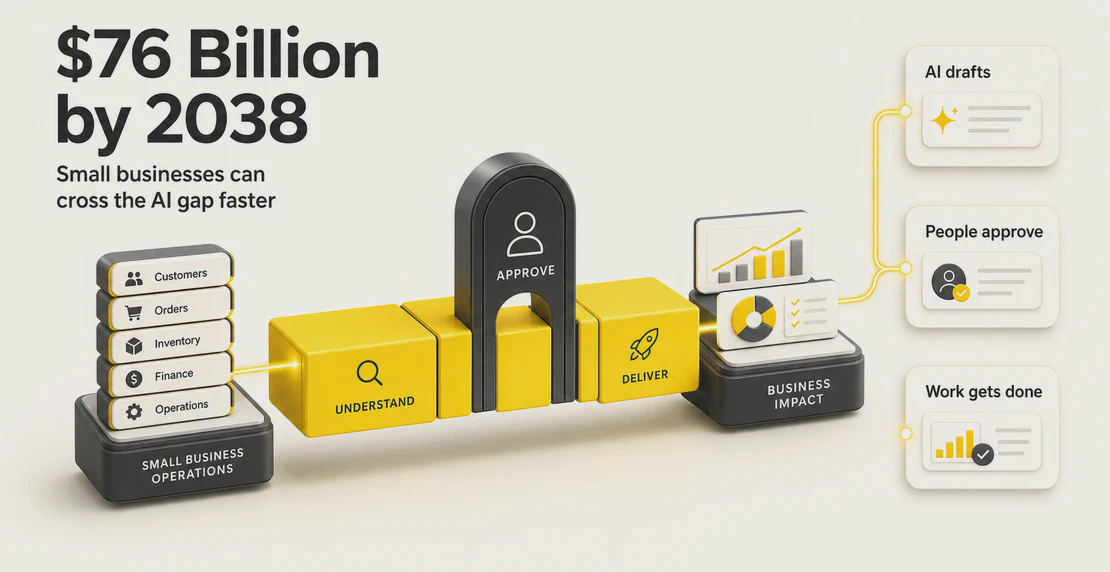
AI changed who moves fastest. A small or medium business can now pick up a new tool, rebuild a workflow, and go after a new market in the time a large company spends booking its first planning meeting. The advantage that used to belong to scale, big budgets, big teams, big systems, has shifted toward businesses that can decide and act without asking six people first.
That is the argument JD Trask made in a recent keynote.
For decades, size was the moat. Bigger firms could afford more staff, more marketing, better systems, and specialists a small team could never justify hiring. If you wanted to compete, you either grew or accepted a smaller slice of the market.
Those advantages have not vanished. What has changed is the cost of capability. Tasks that used to need a whole department, drafting a report, scanning a market, answering a customer, can now be handled by a small team with the right tools. The gap between what a five-person business and a five-hundred-person business can produce in a week has narrowed, and it keeps narrowing.
Enterprise AI adoption is hard, and the reasons are organisational, not technical. Bigger companies carry more approval layers, more stakeholders, more compliance sign-offs, and more people whose jobs touch any given process. A change one founder can approve over coffee becomes a quarterly project once it has to pass legal, IT, procurement, and three managers along the way.
A small business owner can trial an AI tool on Monday and have it running by Friday, without a steering committee or a budget cycle to get through first. If it works, it can be shared directly with team members. If it does not, drop it and try the next one. That speed of decision is worth more than it looks, because AI tools improve month to month, and the businesses learning fastest are the ones already using them.
Large firms also sit on years of legacy software, custom integrations, and data locked in old formats. Every new tool has to fit around that. Smaller businesses usually carry less of this weight, and many can plug into existing integrations for tools like Slack, Google Workspace, and HubSpot. Fewer systems to untangle means fewer reasons to say no, and a shorter path from idea to something running.
Speed of decision compounds. When you can test an idea in days, you get more attempts, more feedback, and more chances to find what works. A large competitor running the same experiment through formal channels might get one attempt in the same quarter.
Small businesses run on the same tools anyone can buy. What sets them apart is how fast they act on them.
Think of AI as extra capacity rather than a cost-cutting measure. In his keynote, Trask described his own approach as “not actually about cost cutting.” A small team can now do work a much bigger team would normally need to handle.
That capacity can support communications, research and reports, operational data, simple internal tools, sales, marketing, service and administration. Human judgement stays necessary. Trask described a hospitality business using an agent to draft Google Business review replies, with a human approving them before posting.
Autohive can support task-specific agents for lead qualification, customer enquiries and report generation.
Capacity changes ambition. Once a small team can produce more, the question shifts from how to keep up locally to where else the business could sell. Trask calls this “design for export.”
New Zealand has a small domestic market and real distance from most customers. AI can help a small business research a foreign market, adapt content, handle customer contact across time zones, and manage the extra administration that comes with selling further afield. Keep AI-assisted work grounded in accurate product information by managing source documents and links.
New Zealand’s Strategy for Artificial Intelligence, released by MBIE in 2025, estimates generative AI adoption alone could add $76 billion to the New Zealand economy by 2038. That is a modelled projection, not a promise. Source.
The OECD’s November 2025 report on generative AI and the SME workforce is based on a representative 2024 survey of more than 5,000 SMEs across seven countries. Source.
Autohive lets a business create custom AI agents without code, connect selected files and URLs as knowledge sources, and test them privately before sharing them with a team. Content Hub handles common business file formats. Agents can run on a schedule and connect to tools a team already uses. See the documentation for details.
Pick a task that is repetitive, follows a rough pattern, and wastes time every week. Define the intended outcome and the human approval point. Run a short pilot. Measure time saved, revenue created, customer impact, or cost avoided. Once a pilot proves reliable, automate recurring jobs.
Yes. The tools are available to anyone, so the differentiator is speed of adoption, not access. Small businesses can often test, keep, or drop a tool faster than a large firm running the same decision through formal channels.
Use AI to lower the cost of research, first-draft communications, and administration. A small team can use that capacity to test markets that previously looked too distant or costly.
Not based on the evidence so far. The OECD survey found most SMEs that adopted generative AI reported better staff performance without reducing headcount.
Fewer layers, less legacy, and less drag let small businesses move. Choose one repetitive workflow your team touches every week and test an AI-assisted version in the next 30 days.

Written by
Jono is the Marketing Operations Lead at Autohive, bridging the gap between commercial strategy and AI-powered execution. With a passion for building systems that scale, he brings structure to complexity and turns marketing activity into measurable …
Jono NourseAt the Aotearoa AI Summit, Autohive co-founder JD Trask argued New Zealand should stop treating AI mainly as a governance and risk topic and start …
Read article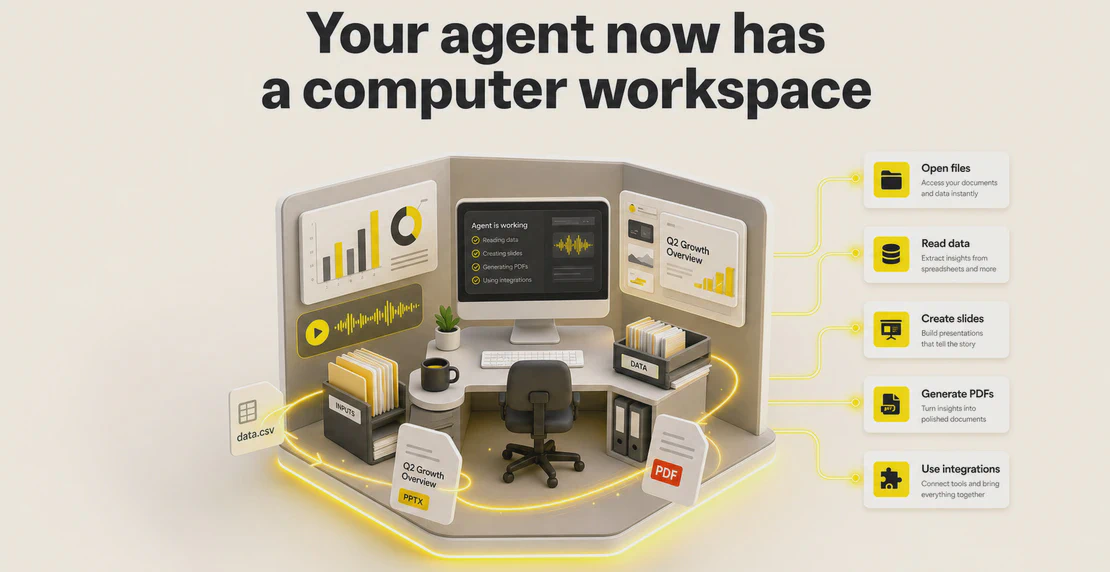 Jono Nourse
Autohive's Reilly handed a generic agent his own 10-year Spotify export and asked it to find something interesting, no code tool or setup required. In …
Read article