Jono Nourse
- 11 Nov, 2026
Built-in integration or MCP? A worksheet for one agent task
Choose a connection using evidence for one action, its required inputs, the returned data, and practical limits.
Read article
Jono Nourse
AI agents for business are easy to try and harder to judge. In one 2026 survey, 92% of AI users said it saves them time. In another, 44.1% of firms said they don’t measure AI’s impact at all. Autohive sells AI agents, so weigh our advice with that in mind. Choose your first agent job by how easily you can measure it. Then count the time people spend checking and maintaining it before you call anything a saving. A task that feels faster may not be cheaper. This guide shows how to score a first job, set a baseline, and work out a net figure.
An AI agent is software that takes a goal, works through the steps, and uses connected apps or files to finish a task. A chat assistant answers when you ask. An agent can be given standing instructions to run a job, such as drafting replies or summarising a weekly report.
In Autohive, you set an agent up without code. You write its instructions, choose the model, and pick the integrations it can use. Agents can run on a schedule, work from files uploaded to your workspace, and be shared with your team. Creating your first agent walks through the setup. Whatever you build, decide up front which steps need human approval.
Most research on small and mid-sized businesses covers general AI use rather than agents. Much of it relies on what people say about their own results. We found no independent audit of small-business agent outcomes while researching this post, though one may exist.
| Source | Sample and context | Finding | Scope and limits |
|---|---|---|---|
| Thryv AI adoption survey, July 2026 | 561 US small-business decision-makers, surveyed in April 2026 | 66% have adopted AI. 92% of users say it saves time. 70% say they need more training. | Vendor survey, unaudited. Time savings are self-reported and cover general AI. |
| SAS and IDC report on AI readiness in SMBs, May 2026 | 1,600 leaders in 28 countries at firms with 100 to 499 staff (up to 999 in the US), surveyed Nov to Dec 2025 | 44.1% do not measure AI impact. 44.7% have scattered data. 22.8% rank advanced automation or agents as a priority. | Commissioned by SAS, a vendor. Firms larger than many small businesses. Reports priorities and practice, with no outcome data. |
| Pax8 research reported by SMBtech, Oct 2026 | 1,150 leaders in the US, UK, Germany, and Sweden | 49% of those paying AI providers got a higher bill than expected. 35% of AI-engaged firms found unapproved AI. | Vendor survey. Covers AI spending in general. |
| NBER working paper “Generative AI at Work”, 2023 | 5,179 support staff at one company | 14% more issues resolved per hour, and 34% for newer or lower-skilled staff | An assistant suggested replies to people. No autonomous agents. Dated working paper. |
The Thryv figure tells you how people feel. It doesn’t show how many hours came off the timesheet, or what checking and fixing cost. More than four in ten firms in the SAS and IDC study weren’t measuring at all. The NBER result is measured, but it covered an assistant helping staff at one company in 2023. Treat all four as context. None predicts your result.
When weighing AI agent use cases for business, start with how easy the result is to count. A good candidate happens often, takes a steady time each round, and does little harm if wrong. It should be quick to check, use information that’s already in order, and have one owner.
The rows below are made-up examples. This is our advice and hasn’t been tested as a ranking method, so adjust it to suit your business.
| Task | Frequency | Time each | Consequence if wrong | Review effort | Ready data | Owner |
|---|---|---|---|---|---|---|
| Draft replies to website enquiries (example) | 100 a week | 6 min | Medium: wrong price or promise | Read every draft | FAQ and price list in one document | Office manager |
| Weekly overdue invoice summary (example) | 1 a week | 45 min | Low: internal only | Spot-check totals | Accounts export | Bookkeeper |
| Review supplier contracts (example) | 3 a month | 90 min | High: legal exposure | Line by line | Spread across email | Unclear |
The enquiry job is the strongest candidate in this example. It happens often, so two weeks gives you many replies to compare. The invoice summary runs weekly, so collecting enough rounds takes longer. The contract job needs work on data and ownership, and mistakes could do more harm. If you can’t name an owner, the task isn’t ready. For work that runs on a timetable, our guide to repeat jobs shows how to schedule an agent for repeat work.
You can’t claim a saving against a number you never recorded. Before the agent touches the work, time the task as it runs today. A rough log in a shared spreadsheet is enough.
Use at least two normal weeks. Avoid weeks with public holidays, sales, or staff leave, since they can skew the count. Record:
Then run the agent on the same task for the same length of time and record the same things. Add the minutes spent checking drafts, rewriting drafts beyond a normal review, and updating the agent’s instructions and source files. These figures show whether the claimed saving holds up. Leave them out and your AI agent ROI figure may look better than your week felt. ROI means return on investment.
This example is hypothetical. The numbers are made up and don’t come from an Autohive customer.
A business gets 100 email enquiries a week. Each reply takes a staff member about 6 minutes. That’s 600 minutes, or 10 hours, a week.
The business sets up an agent to draft replies from its price list and FAQ document. A person still reads every draft. After a two-week trial, the log shows:
| Item | Minutes a week |
|---|---|
| Reviewing 100 drafts (2 min each) | 200 |
| Extra rewriting beyond review | 60 |
| Updating prices, policies, and instructions | 60 |
| Total human time with the agent | 320 (5 h 20 min) |
The rewriting line counts only time spent reworking poor drafts on top of the normal read-through. None of it is counted twice.
Net time back is 600 minus 320, which is 280 minutes or 4 hours 40 minutes a week. That’s less than half the 10 hours a quick pitch might promise.
At $40 an hour, 4.67 hours is worth about $187 a week in staff capacity, before the agent’s own running cost. Treat it as capacity. It becomes a cash saving only if paid hours actually drop. Using the time for paid work could add revenue instead.
Agents still make mistakes. In Anthropic’s Project Vend, an AI agent ran an office shop. In phase two its sales discipline improved, but it kept making legal and business errors. Put these checks in place during the trial:
A good first use is a frequent, repeatable task where a wrong answer is easy to catch and cheap to fix. Drafting replies to common enquiries for a person to check is one example. Pick something you can count, with clear source information and a named owner.
Measure the same task before and after. Time it for two normal weeks without the agent, then two weeks with it. Include review, rewriting, and upkeep minutes in the “after” figure. Subtract that full human time from your baseline to get the net saving.
Plan for a person to read every output at first. In our hypothetical example, review took 2 minutes per item, against 6 minutes to write a reply from scratch. Your figure will differ, so log it during the trial. Cut back checking only once errors stay rare over several weeks.
Run a baseline for at least two normal weeks. A single week can be skewed by a public holiday, a promotion, or someone on leave. For tasks that happen weekly or monthly, you’ll need longer to collect enough rounds for a fair comparison.
Shadow AI is AI that staff use without approval or oversight. Pax8’s survey found it in 35% of AI-engaged businesses. It matters because nobody is tracking the cost, the data being shared, or the quality of the output. A simple list of agents and their owners keeps it visible.
The person who owns the task today should own the agent. They know what a good result looks like and can spot errors. They can also update the instructions when prices or policies change. If nobody owns the task yet, sort that out before adding an agent.
This week, fill in the scoring table for three tasks your team already does, then start timing the strongest one. Once your baseline is done, the Autohive quickstart guide shows how to set up your first agent and run the comparison.

Written by
Jono is the Marketing Operations Lead at Autohive, bridging the gap between commercial strategy and AI-powered execution. With a passion for building systems that scale, he brings structure to complexity and turns marketing activity into measurable …
Jono NourseChoose a connection using evidence for one action, its required inputs, the returned data, and practical limits.
Read article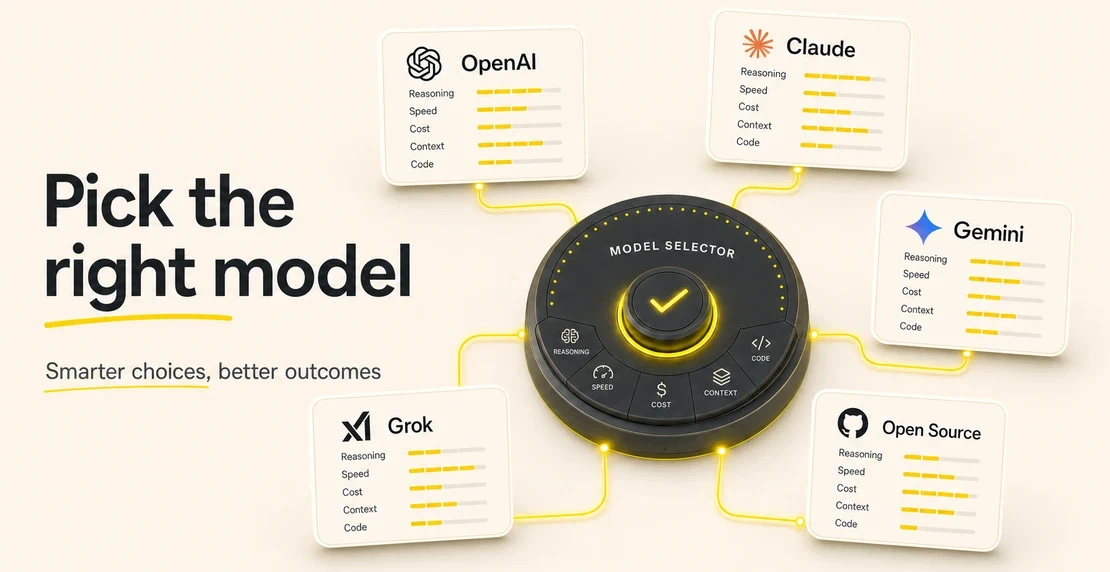 Jono Nourse
This guide helps you choose the right AI model for your Autohive agent by breaking down the pros, cons, and best use cases for the latest offerings …
Read article