For a while, no-code AI was a curiosity. Teams built a chatbot, showed it off in a demo, and moved on. That phase is ending. Non-technical teams are now building AI that does real work: answering customers, drafting reports, chasing invoices, moving data between the tools they already use. The technology is shifting from something you try to something you run the business on.
Autohive exists for that shift. Our job is to make agent building accessible to the people who understand the work, useful enough to earn a place in daily operations, and governed well enough that a company can trust it.
What no-code AI actually is
No-code AI lets people build, configure, and deploy AI workflows and agents without writing code. Instead of programming, you describe what you want in plain language, connect the tools you already use, and assemble logic through a visual builder.
The category covers a few things: natural language interfaces, AI assistants embedded in existing software, drag-and-drop model builders, and agent builders. The last one matters most. Early no-code tools produced apps. The newer wave produces agents that take multi-step actions on your behalf, and that changes how work actually gets done.
Why teams need it
The old bottleneck was developer time. If operations wanted an automation, they filed a request, joined a queue, and waited. The people who understood the process best were the furthest from being able to build for it.
No-code AI closes that gap. The person who runs procurement can build the procurement agent. Finance can own the finance workflow. Builds happen in hours instead of sprints, costs drop, and the business stops depending on scarce engineering time for every small improvement.
Gartner predicts that by 2026, around 80% of technology products and services will be built by people who are not professional developers. Whether the exact figure holds, the direction is clear across operations, HR, finance, IT, procurement, marketing, legal, and compliance. Analysts at Fortune Business Insights, Grand View Research, and Mordor Intelligence all point to strong growth through the next decade.
What goes wrong without structure
Here’s the part most vendors skip: lowering the barrier to build also lowers the barrier to make a mess.
When anyone can spin up an agent, you get shadow AI running outside IT’s view, sensitive data flowing into places it shouldn’t, and agent sprawl: dozens of half-finished bots nobody owns. Someone leaves, and their agents become orphaned systems that still touch live data. Regulatory exposure follows close behind.
No-code doesn’t mean no skill. Process design, data discipline, clear permissions, and named accountability still decide whether an agent helps or creates risk. The tools are easy to use. Doing it responsibly is a choice, and the platform has to make that choice easy too.
That’s why governance sits inside Autohive instead of being bolted on afterward. Workspace permissions, admin roles, and shared visibility mean agents are built in the open, owned by someone, and controlled at the workspace level. Teams get the freedom to build without the sprawl that usually comes with it.
How Autohive approaches it
The core idea is simple: the instruction is the code. You write an agent’s job description in plain language, and that description is the configuration. From there you can:
- Pick your model through the UI, across Anthropic, OpenAI, xAI, Gemini, and OpenRouter.
- Connect existing tools through OAuth, including Slack, HubSpot, Google Drive, Gmail, GitHub, Notion, and Microsoft Teams, so your stack stays put instead of being replaced.
- Upload company files, playbooks, FAQs, and product docs so the agent works from your context, not generic knowledge.
- Schedule recurring jobs, and connect triggers, tools, and agents in a visual workflow builder.
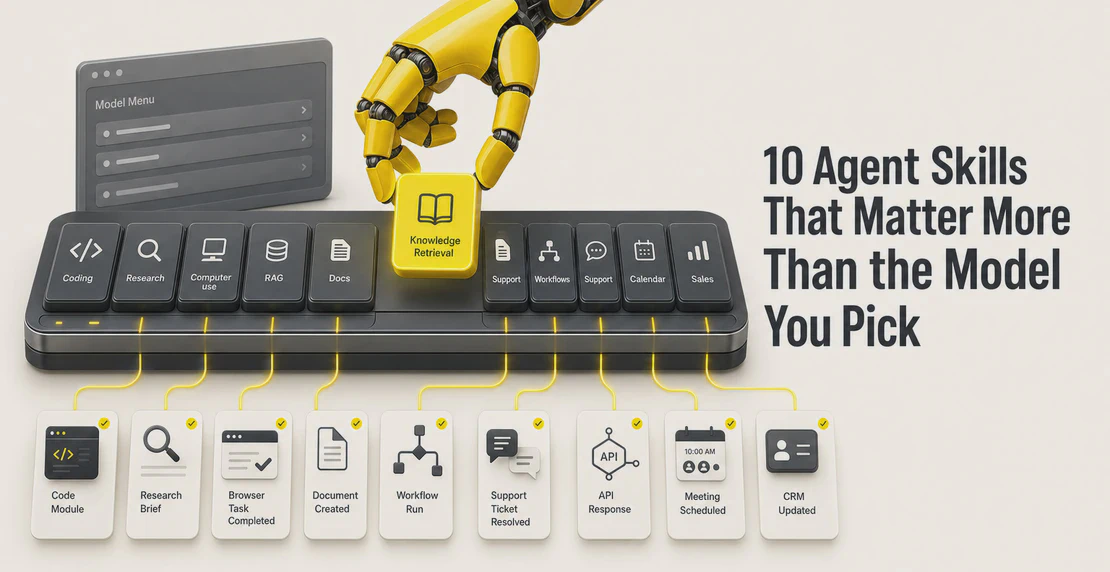
You can start from scratch or grab a ready-made agent from the Autohive Marketplace and adapt it. New to this? The Creating Your First Agent guide walks through it. And because outcomes depend more on how you brief an agent than which model you pick, 10 Agent Skills That Matter More Than the Model You Pick is worth reading early.
One thing that sets Autohive apart is already live: multi-agent workspaces, where people and several agents work together in one chat. If you want to see how that works in practice, the multi-agent guide shows how to set up a team.
Where this is going
The growth frontier is workflows: proactive, multi-step automation instead of reactive question-and-answer. Deeper tool connectivity through the Model Context Protocol, mobile support with approvals and mentions, and emerging finance use cases, including Autohive in the Xero App Store, all point the same way. Agents are moving from things you chat with to things that run parts of the business while you approve the parts that matter.
No-code AI is becoming infrastructure. The question for most teams isn’t whether to build agents anymore. It’s how to build them so they stay useful, owned, and safe as they multiply. That’s the problem we’re focused on.


Jono Nourse